
A balance transfer credit card can be one of the cheapest ways to tackle existing credit-card debt in the UK, but the longest 0% offer is not automatically the cheapest option.
For this UK Finance Blog review, we compared the latest balance-transfer offers, provider terms and eligibility rules, while also reviewing published analysis from UK personal-finance specialists including Rachel Springall of Moneyfacts, Rachel Wait of Finder, Lucinda O’Brien of money.co.uk and Adam French of Moneyfacts.
The headline market is competitive. The longest advertised balance-transfer offer currently reaches up to 38 months at 0%, while several providers offer up to 36 months. At the other end of the market, borrowers who can clear their debt more quickly can find shorter deals charging little or no transfer fee.
Our central finding is simple: the strongest balance transfer card for a borrower is normally the lowest-cost offer that gives them enough time to repay the transferred debt in full.
That is different from simply selecting whichever card has the biggest number of interest-free months.
What Are the Best Balance Transfer Credit Cards in the UK Right Now?
The table below brings together 20 balance-transfer cards and offers worth comparing as of 3 October 2026.
Offers can change quickly, and an advertised “up to” period is not necessarily the period every successful applicant receives. Always check the provider’s personalised offer and Summary Box before accepting a card.
| # | Balance transfer credit card | Headline 0% period | Introductory transfer fee | Fee on £5,000* | Representative APR | Important point |
| 1 | TSB Platinum Balance Transfer | Up to 38 months | 3.49% | £174.50 | 24.9% | Longest headline term; transfer within first 90 days |
| 2 | HSBC Balance Transfer | Up to 36 months | 3.09% | £154.50 | 24.9% | Transfer within first 60 days |
| 3 | Virgin Money Balance Transfer | Up to 36 months | 3.10% | £155.00 | 24.9% | Transfer within 60 days; Virgin Money is now part of Nationwide |
| 4 | NatWest Longer Balance Transfer | Up to 36 months | 3.10% | £155.00 | 24.9% | Personalised term can be shorter |
| 5 | RBS Longer Balance Transfer | Up to 36 months | 3.10% | £155.00 | 24.9% | NatWest Group transfer restrictions apply |
| 6 | Ulster Bank Longer Balance Transfer | Up to 36 months | 3.10% | £155.00 | 24.9% | Term can vary following credit assessment |
| 7 | Barclaycard Platinum Balance Transfer | Up to 36 months | 3.15% | £157.50 | 24.9% | Transfer within 60 days |
| 8 | MBNA Long Balance Transfer | 36 months | 3.29% | £164.50 | 24.9% | Maximum transfer generally 93% of credit limit |
| 9 | Tesco Bank Balance Transfer | 36 months guaranteed | 3.45% | £172.50 | 24.9% | 36-month period is advertised as guaranteed |
| 10 | Lloyds Bank Long 0% Balance Transfer | 35 months | 2.49% | £124.50 | 24.9% | Particularly competitive fee for a long term |
| 11 | Halifax Longest 0% Balance Transfer | 35 months | 2.49% | £124.50 | 24.9% | Current comparison listing is for existing customers |
| 12 | Santander Everyday Long Term | 34 months | 3.15% | £157.50 | 24.9% | No monthly account fee |
| 13 | M&S Bank Transfer Plus | Up to 30 months | 3.49% | £174.50 | 24.9% | Transfer must be completed within 90 days |
| 14 | Nationwide Balance Transfer | 30 months | 2.99% | £149.50 | 24.9% | Existing Nationwide relationship required |
| 15 | Barclaycard Platinum lower-fee BT | Up to 22 months | 1.49% | £74.50 | 24.9% | Lower fee than the 36-month Barclaycard |
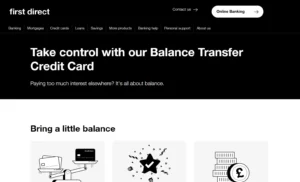
| 16 | first direct Balance Transfer | 20 months | 2.99% | £149.50 | 24.9% | Transfer within 90 days |
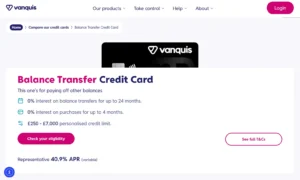
| 17 | Vanquis Balance Transfer | Up to 19 months | Up to 4.50% | Up to £225 | 35.9% | Wider lending profile; personalised offer |
| 18 | Virgin Money 18-month Balance Transfer | 18 months | 0.95% | £47.50 | 24.9% | Lower-cost alternative if 18 months is enough |
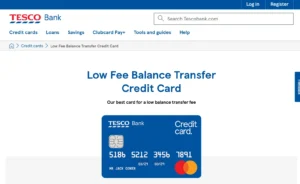
| 19 | Tesco Bank Low Fee Balance Transfer | 15 months guaranteed | 0.75% | £37.50 | 24.9% | One of the lowest transfer fees in this comparison |
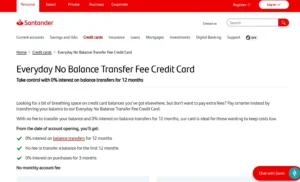
| 20 | Santander Everyday No Balance Transfer Fee | 12 months | 0% | £0 | 24.9% | No transfer fee or monthly account fee |
*Illustrative transfer-fee calculation only. It assumes the stated percentage applies to a £5,000 balance. It does not include subsequent interest, account fees or personalised terms.
The longest-term information is consistent with current comparison data from Finder and MoneySavingExpert, while individual terms have been cross-checked against provider information where available.
1. TSB Platinum Balance Transfer Credit Card – Up to 38 Months
Check the TSB Credit Cards Here
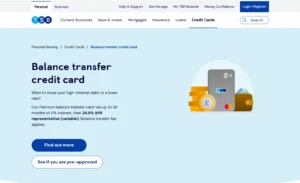
TSB currently advertises the longest headline 0% balance-transfer period in this comparison: up to 38 months.
Balance transfers completed in the first 90 days carry a 3.49% fee. TSB permits transfers from £100 up to 95% of the available credit limit, but existing TSB credit-card debt cannot be transferred.
The card also provides 0% interest on purchases for the first three months, with a representative APR of 24.9% variable after promotional terms.
For a £5,000 transfer, 3.49% represents £174.50. Assuming that fee is added to the debt and there is no further spending, clearing £5,174.50 over 38 months would require roughly £136.17 a month.
The crucial word is “up to”. TSB states that promotional periods can depend on individual circumstances.
2. HSBC Balance Transfer Credit Card – Up to 36 Months
Check the HSBC Credit Cards Here
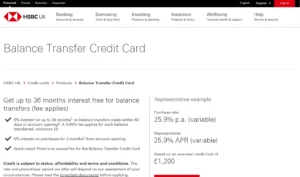
HSBC offers up to 36 months at 0%, with a 3.09% balance-transfer fee, subject to a £5 minimum fee.
The transfer must be made during the first 60 days after account opening to qualify for the promotional rate. HSBC also offers three months at 0% on purchases and charges no annual fee.
Representative APR is 24.9% variable. HSBC makes particularly clear that the rate and promotional term actually offered depend on its assessment of the applicant.
On £5,000, the 3.09% transfer fee is £154.50, giving an illustrative starting balance of £5,154.50.
3. Virgin Money Balance Transfer Credit Card – Up to 36 Months
Check the Virgin Money’s Credit Cards Here
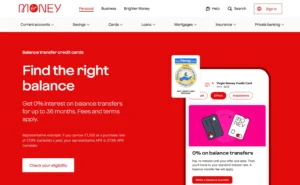
Virgin Money’s current range includes a card offering up to 36 months at 0% on balance transfers completed during the first 60 days.
Current comparison data shows a 3.10% transfer fee on the 36-month version, a £0 annual fee and a representative APR of 24.9%. Virgin Money itself confirms the 36-month maximum, 60-day window and ability to transfer up to 95% of the credit limit.
There is an unusually important restriction to understand in 2026: Virgin Money’s business transferred to Nationwide on 2 April 2026. Nationwide consequently states that balances can no longer be transferred between Nationwide and Virgin Money credit cards.
That banking-group point is easy to miss when comparing cards purely by months and fees.
4. NatWest Longer Balance Transfer Credit Card – Up to 36 Months
Check the NatWest Credit Cards Here
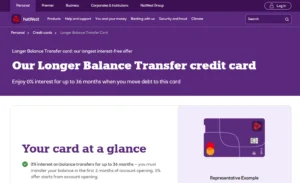
NatWest advertises up to 36 months at 0%, charging a 3.10% transfer fee.
The balance needs to be moved within the first three months. Customers can generally transfer between £100 and 95% of their available credit limit.
NatWest states that the actual 0% term can be between 16 and 36 months, depending on its credit assessment. It also requires applicants to be UK residents aged 18 or over with annual income of at least £10,000.
Balances from other NatWest Group credit cards cannot be transferred.
This is a good illustration of why an “up to 36 months” search result should not be treated as a guaranteed 36-month deal.
5. Royal Bank of Scotland Longer Balance Transfer Credit Card – Up to 36 Months
Check the RBS Credit Cards Here
RBS has a structurally similar offer: up to 36 months at 0%, a 3.10% fee, three months at 0% on purchases and a representative APR of 24.9%.
The introductory balance needs to be transferred in the first three months, and balance-transfer limits and issuer-group exclusions apply. Applicants also need to satisfy the provider’s status and affordability requirements.
Anyone already carrying debt elsewhere in NatWest Group should check whether that particular balance can be moved before applying.
6. Ulster Bank Longer Balance Transfer Credit Card – Up to 36 Months
Check the Ulster Credit Cards Here
Ulster Bank also offers up to 36 months at 0% with a 3.10% introductory fee.
The provider says customers need to transfer their balance within three months, with a minimum £100 transfer and a maximum of 95% of the available credit limit.
Its advertised representative APR is 24.9%. As with NatWest, the actual promotional period can fall between 16 and 36 months following credit assessment.
Again, balances from other NatWest Group cards are excluded.
7. Barclaycard Platinum Balance Transfer – Up to 36 Months
Check the Barclaycard Credit Cards Here
Barclaycard currently offers up to 36 months at 0% with a 3.15% transfer fee.
Transfers need to be completed within 60 days of account opening. The card also includes three months at 0% on purchases, with a 24.9% representative APR.
Barclaycard provides unusually useful detail about the meaning of “up to”. Its current disclosure says at least seven in ten customers accepted in the previous month received the longest promotional period; other accepted applicants could receive shorter alternatives.
The 0% clock also begins when the account opens, not when the transfer is eventually made.
That means waiting 60 days to move the debt does not give the borrower another full 36 months from the transfer date.
8. MBNA Long Balance Transfer Credit Card – 36 Months
Check the MBNA Credit Cards Here
Current comparison data lists MBNA’s Long Balance Transfer Credit Card with 36 months at 0%, a 3.29% transfer fee, no annual fee and a representative APR of 24.9%.
MBNA says a balance transfer must be from another provider. The minimum transfer is £100, while its normal maximum is 93% of the credit limit, leaving room for fees and transactions.
That 93% restriction matters when the balance being refinanced is close to the applicant’s new credit limit.
9. Tesco Bank Balance Transfer Credit Card – Guaranteed 36 Months
Check the Tesco Credit Cards Here
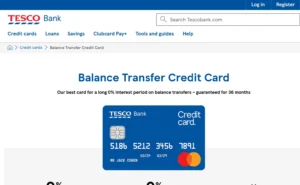
Tesco Bank stands out because its current headline says the 36-month 0% balance-transfer period is guaranteed, rather than merely “up to” 36 months.
Its transfer fee is 3.45%, and the representative APR is 24.9%. The card also offers a separate introductory money-transfer facility and Clubcard points on qualifying spending.
A guaranteed promotional term can be easier to plan around than a card where successful applicants may receive different 0% periods.
However, the 3.45% fee means borrowers should still compare the total cost against cheaper 35- or 36-month alternatives.
10. Lloyds Bank Long 0% Balance Transfer Card – 35 Months

Check the Lloyds Credit Cards Here
The Lloyds Bank long balance-transfer card currently combines 35 months at 0% with a comparatively low 2.49% transfer fee.
It also includes six months at 0% on purchases and has a representative APR of 24.9%. Current product comparisons list no annual fee.
Lloyds normally limits balance transfers to 93% of the credit limit, with a £100 minimum.
Moneyfacts’ Adam French described the offer as:
“one of the longest 0% balance transfer periods on the market”
Moneyfacts noted that the introductory balance had to be transferred within 90 days and reported a £14,000 minimum annual income at the time of its review.
For £5,000 of debt, a 2.49% fee is £124.50, £50 less than a 3.49% fee on the same transfer.
That illustrates why comparing fees alongside months can materially change the result.
11. Halifax Longest 0% Balance Transfer Credit Card – 35 Months

Check the Halifax Credit Cards Here
Current Finder comparison data lists the Halifax Longest 0% Balance Transfer Credit Card at 35 months, with a 2.49% fee, six months at 0% on purchases and a representative APR of 24.9%.
The particular current listing is marked existing customers only.
Anyone considering it should therefore check their eligibility before treating the 35-month deal as an available option.
12. Santander Everyday Long Term Balance Transfer Credit Card – 34 Months
Check the Santander’s Credit Cards Here
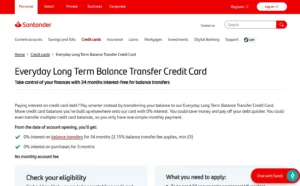
Santander’s Everyday Long Term card provides 34 months at 0%, with a 3.15% balance-transfer fee subject to a £5 minimum.
It has no monthly account fee and provides three months at 0% on purchases. Its representative APR is 24.9%.
Santander allows transfers from £100 up to 95% of the available credit limit but excludes balances from other Santander and cahoot credit cards. Loans and current-account debt also cannot be transferred using the normal balance-transfer facility.
Santander currently requires applicants to be permanent UK residents aged 18 or over with guaranteed annual income of at least £10,500, alongside its credit-status requirements.
13. M&S Bank Transfer Plus Credit Card – Up to 30 Months
Check the M&S Credit Cards Here
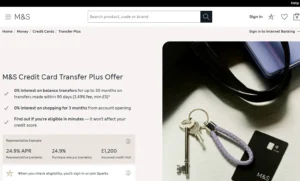
M&S Bank’s Transfer Plus card offers up to 30 months at 0% for transfers completed within 90 days of account opening.
The introductory transfer fee is 3.49%, minimum £5, while purchases receive three months at 0%. Cardholders can also earn M&S Rewards points on qualifying spending.
One restriction worth checking is issuer group. M&S Bank credit is provided by HSBC UK Bank, and transfers between certain HSBC Group cards are restricted. first direct, for example, explicitly identifies M&S Bank as an HSBC Group card that cannot be used for an internal balance transfer.
14. Nationwide Balance Transfer Credit Card – 30 Months
Check the Nationwide Credit Cards Here
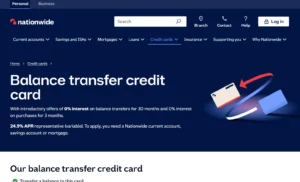
Nationwide offers 30 months at 0%, charging a 2.99% transfer fee with a £5 minimum.
Purchases are interest-free for the first three months, and the representative APR is 24.9%.
However, this is a member product. Applicants need a Nationwide current account, savings account or mortgage.
Nationwide also explicitly states that balance transfers between Nationwide and Virgin Money cards are no longer available following the transfer of Virgin Money’s business to Nationwide in April 2026.
15. Barclaycard Platinum Lower-Fee Balance Transfer – Up to 22 Months

Check the Barclaycard Credit Cards Here
Not everybody needs three years.
Barclaycard currently also advertises a shorter card providing up to 22 months at 0% for a 1.49% transfer fee.
On £5,000, 1.49% costs £74.50.
Compare that with £157.50 on Barclaycard’s 3.15% 36-month option. Someone who can genuinely repay within 22 months could therefore save £83 in transfer fees by choosing the shorter offer, assuming they qualify for the stated terms.
This is exactly why “longest” should not be used as a synonym for “cheapest”.
16. first direct Balance Transfer Credit Card – 20 Months
Check the first direct Credit Cards Here
first direct currently offers 20 months at 0%, with a 2.99% fee, minimum £5, on qualifying transfers made within 90 days.
There is no annual fee and the representative APR is 24.9%.
The bank also makes its group restrictions explicit: transfers between cards operated by HSBC Group members, including M&S Bank, are not permitted.
That is the type of restriction a standard “best credit cards” table can easily overlook.
17. Vanquis Balance Transfer Credit Card – Up to 19 Months
Check the Vanquis Credit Cards Here
Vanquis is useful to include because the balance-transfer market is not only about mainstream cards aimed at applicants with strong credit histories.
Its current card offers up to 19 months at 0%, three months at 0% on purchases and a personalised credit limit between £250 and £7,000.
Transfers need to be completed within 60 days. The transfer fee can be up to 4.5%, and the representative APR is significantly higher at 35.9%. A maximum of 90% of the credit limit can normally be transferred.
This makes checking the personalised terms particularly important. A borrower who cannot clear the balance before the introductory period ends could face a much higher ongoing rate.
18. Virgin Money 18-Month Balance Transfer Card – 0.95% Fee

Check theVirgin Money’s Credit Cards Here
Virgin Money’s range also illustrates the value of choosing the shortest sufficient term.
Current Finder comparison data lists an 18-month 0% balance-transfer card with a 0.95% fee and no annual fee.
On a £5,000 transfer, 0.95% costs just £47.50.
A borrower capable of clearing £5,047.50 over 18 months would need to budget roughly £280.42 a month.
That is a much larger monthly payment than a 36-month product requires, but considerably less is lost to the initial transfer fee.
19. Tesco Bank Low Fee Balance Transfer Credit Card – 15 Months
Check the Tesco’s Credit Cards Here
Tesco’s Low Fee card currently gives a guaranteed 15 months at 0% with a particularly low 0.75% balance-transfer fee.
That costs just £37.50 on £5,000.
Tesco says customers can transfer up to 95% of available credit. Representative APR is 24.9%.
Someone able to repay £5,037.50 within the full 15-month promotional period would need to set aside approximately £335.83 each month.
For a borrower who can manage that repayment, paying 0.75% rather than 3%+ simply to obtain more unused months may make little financial sense.
20. Santander Everyday No Balance Transfer Fee Credit Card – 12 Months
Check the Santander’s Credit Cards Here
Santander’s fee-free card currently provides 12 months at 0% with no balance-transfer fee.
It also offers three months at 0% on purchases, has no monthly account fee and carries a representative APR of 24.9%.
A £5,000 transferred balance therefore remains £5,000 at the start, assuming no other charges or spending.
To clear it in 12 equal instalments would require approximately £416.67 a month.
For someone who can comfortably make that repayment, the absence of an upfront transfer fee is potentially more valuable than securing a longer promotional window.
Which Balance Transfer Credit Card Has the Longest 0% Period?
As of 3 October 2026, the longest advertised period we found is TSB’s up to 38 months at 0%, with a 3.49% introductory transfer fee.
Several providers are close behind at up to 36 months, including HSBC, Virgin Money, NatWest, RBS, Ulster Bank, Barclaycard, MBNA and Tesco Bank.
Moneyfacts finance expert Rachel Springall observed earlier in 2026:
“Competition has ignited on introductory interest-free card offers”
Moneyfacts found that the average 0% balance-transfer period had risen to 605 days in June 2026, while its average balance-transfer fee had fallen to 2.48%.
The figures help explain why borrowers should compare the market instead of automatically accepting a transfer offer from their existing bank.
Is the Longest Balance Transfer Card Actually the Best Deal?
Not necessarily.
This is probably the most important distinction in the whole comparison.
Suppose £5,000 needs to be transferred.
| Example offer | Transfer fee | Initial fee | Total to repay | Approx. monthly amount to clear within offer |
| 38 months at 3.49% | 3.49% | £174.50 | £5,174.50 | £136.17 |
| 35 months at 2.49% | 2.49% | £124.50 | £5,124.50 | £146.41 |
| 22 months at 1.49% | 1.49% | £74.50 | £5,074.50 | £230.66 |
| 18 months at 0.95% | 0.95% | £47.50 | £5,047.50 | £280.42 |
| 15 months at 0.75% | 0.75% | £37.50 | £5,037.50 | £335.83 |
| 12 months at 0% | £0 | £0 | £5,000 | £416.67 |
These calculations assume no additional spending and no interest during the promotional period.
The correct question is therefore not:
“Which card gives me the most months?”
It is:
“What is the lowest total-cost card whose 0% period gives me enough time to repay the debt?”
Finder personal finance expert Rachel Wait makes the same underlying point:
“it’s worth looking for a balance transfer card that has no balance transfer fee”
when a borrower can afford to clear the balance over a shorter period.
What Does “Up to 36 Months” Actually Mean?
This wording deserves more attention than it normally receives.
An offer advertising “up to 36 months” does not mean every successful applicant will get 36 months.
The provider might assess:
- Credit history
- Existing borrowing
- Income and expenditure
- Affordability
- Current relationship with the lender
- Overall credit utilisation and
- Its own internal lending criteria.
NatWest, for example, currently says its Longer Balance Transfer Card can provide between 16 and 36 months, depending on the customer’s credit assessment.
Barclaycard similarly publishes shorter alternative periods for applicants who are accepted but do not qualify for the maximum offer.
Tesco Bank is unusual in the current market because its main 36-month balance-transfer card describes the promotional period as guaranteed for 36 months, although acceptance and credit limit are still subject to status.
How Does a Balance Transfer Credit Card Work?
A balance transfer moves existing debt from one or more credit or store cards onto a different credit card.
If the new card offers 0% interest on transferred balances, payments during the promotional period can reduce the underlying balance rather than being absorbed by interest.
For example:
- A borrower owes £5,000 on an existing credit card charging interest.
- They are accepted for a 0% balance-transfer card.
- The new card provider sends the agreed amount to the old card provider.
- The £5,000 debt — plus any transfer fee — is now owed on the new card.
- The borrower makes monthly payments to the new provider.
- If the balance is cleared before the 0% period expires, interest on the transferred balance can potentially be avoided.
MoneySuperMarket gives a similar example using £5,000 and demonstrates how repayments on a 0% card can go directly towards reducing the transferred balance rather than servicing ongoing interest.
How Much Does a Balance Transfer Cost?
Most long 0% offers charge a one-off percentage of the transferred balance.
The calculation is straightforward:
Amount transferred × transfer-fee percentage = transfer fee
For example:
£6,000 × 3.10% = £186
The borrower would then normally owe approximately £6,186 on the new card, assuming the fee is added to the card balance.
Fees around 3% might appear modest, but on large debts they become meaningful:
| Amount transferred | 0.75% fee | 1.49% fee | 2.49% fee | 3.10% fee | 3.49% fee |
| £1,000 | £7.50 | £14.90 | £24.90 | £31.00 | £34.90 |
| £3,000 | £22.50 | £44.70 | £74.70 | £93.00 | £104.70 |
| £5,000 | £37.50 | £74.50 | £124.50 | £155.00 | £174.50 |
| £10,000 | £75.00 | £149.00 | £249.00 | £310.00 | £349.00 |
This is why borrowers with enough monthly disposable income to clear the balance quickly should pay particular attention to low-fee and no-fee products.
How Much Should You Repay Each Month?
Rather than relying on the lender’s contractual minimum, establish the repayment required to reach £0 before the promotional period finishes.
A simple calculation is:
Transferred debt + transfer fee ÷ number of 0% months
For £8,000 transferred to a 36-month card charging 3.10%:
- Original debt: £8,000
- Transfer fee: £248
- Starting transferred balance: £8,248
- £8,248 ÷ 36 = approximately £229.11 per month
Setting a Direct Debit for at least the minimum payment protects against accidentally missing a due date, but a separate fixed repayment target is usually needed to ensure the debt is actually cleared.
Moneyfacts’ Rachel Springall has warned:
“credit card holders who do not have a 0% offer and only pay the bare minimum back each month”
can have their debt hanging over them considerably longer than expected.
Why Should You Use an Eligibility Checker Before Applying?
A comparison table tells you what exists in the market. It does not tell you what a particular lender will offer you.
Many providers now offer eligibility checks using a soft credit search. A soft search can estimate acceptance likelihood without leaving the same visible application footprint as a full credit application.
Lucinda O’Brien, Senior Financial Editor at money.co.uk, explains:
“An eligibility tool is a quick and low risk way to ensure you only apply for a card you’re likely to be accepted for.”
That matters because repeatedly making full applications after rejection is very different from comparing eligibility first.
The sensible sequence is generally:
- Check your existing balance and APR.
- Decide the maximum monthly repayment you can genuinely maintain.
- Work out how many months you need.
- Compare cards meeting that repayment horizon.
- Run soft-search eligibility checks where available.
- Compare the personalised 0% period, fee and credit limit.
- Only then decide whether to make a full application.
Can You Transfer Your Entire Credit Card Balance?
Not always.
Receiving a £5,000 credit limit does not necessarily mean £5,000 can be transferred.
Examples include:
- TSB: up to 95% of the credit limit.
- NatWest: up to 95%.
- Ulster Bank: up to 95%.
- Virgin Money: up to 95%.
- MBNA: normally up to 93%.
- Lloyds: up to 93%.
- Vanquis: normally up to 90% on its current 0% transfer card.
A borrower with £6,000 of old debt who receives only a £4,000 credit limit may therefore be unable to move the whole debt.
A partial balance transfer can still be useful. Moving the highest-interest portion of the debt to 0% can reduce interest costs even where the new credit limit is insufficient for full consolidation.
Can You Transfer More Than One Credit Card?
Often, yes.
Several providers allow multiple existing credit- or store-card balances to be consolidated, provided:
- The total remains within the transfer limit
- Each transfer meets any minimum requirement
- The old cards are with permitted issuers and
- The transfers are completed inside the introductory window.
Virgin Money, for example, says customers can transfer as many cards as required within its overall limit.
Consolidation can make repayments easier to track, but it should not become an excuse to rebuild balances on the old cards.
Can You Transfer Debt Between Cards From the Same Bank?
Often not.
This is one of the biggest practical traps in the balance-transfer market.
Providers generally do not want customers moving debt from one of their own products to another purely to obtain a promotional rate.
Restrictions can extend beyond the visible bank name because several brands belong to the same banking group.
Examples include:
- TSB excludes transfers from TSB credit cards.
- NatWest excludes NatWest Group cards.
- Ulster Bank excludes NatWest Group cards.
- Santander excludes Santander and cahoot credit cards.
- first direct does not allow transfers between certain HSBC Group cards, including M&S Bank.
- Nationwide and Virgin Money can no longer transfer balances between each other following their 2026 integration.
- MBNA does not permit transfers between MBNA cards.
Check the provider rather than assuming a different logo means a different eligible banking group.
How Quickly Must the Balance Be Transferred?
This is another detail that can turn a strong offer into an expensive mistake.
Many promotional rates only apply when the transfer is requested within an initial window.
Current examples include:
- HSBC: first 60 days.
- Virgin Money: first 60 days.
- Barclaycard: first 60 days.
- Vanquis: first 60 days.
- TSB: first 90 days.
- M&S Bank: first 90 days.
- first direct: first 90 days.
- NatWest/RBS/Ulster: first three months.
Do not open a balance-transfer card and assume the transfer can be left for six months while retaining the advertised deal.
Does the 0% Period Start When the Balance Is Transferred?
Often, no.
A common misunderstanding is that a “36-month balance-transfer card” gives 36 months starting on the day the debt arrives.
Many products instead run the introductory period from account opening.
Barclaycard explicitly warns that delaying the transfer by 60 days effectively uses up around two months of the promotional period.
For that reason, once a card has been opened, eligible transfers should generally be arranged promptly.
At the same time, continue making payments to the old card until the transfer has actually completed. A pending transfer does not remove the existing payment obligation.
What Happens When the 0% Balance Transfer Period Ends?
Any transferred debt still outstanding usually starts attracting the card’s standard balance-transfer interest rate.
That can be a substantial jump from 0%.
A 34-, 36- or 38-month promotional offer should therefore be treated as a repayment deadline, not free borrowing with no end date.
A useful approach is to aim to clear the debt one or two months before the advertised end date. That provides a small margin if a payment is lower than expected or the promotional date was misunderstood.
Can You Lose the 0% Balance Transfer Offer Early?
Potentially, yes.
Missing required payments or breaching card terms can put introductory rates at risk.
Providers’ exact conditions differ, but the safest approach is to:
- Set up a direct debit
- Pay at least the required minimum every month
- Remain within the credit limit
- Keep contact information current
- Check monthly statements, and
- Immediately investigate any rejected or failed payment.
Vanquis, for example, explicitly warns in its Summary Box that promotional rates can be removed following missed minimum payments.
Should You Spend on a Balance Transfer Credit Card?
Usually, the cleanest strategy is to treat a specialist balance-transfer card as a debt-repayment tool, not a new spending facility.
Some cards in our comparison do provide 0% purchase periods, but they are often much shorter than their balance-transfer promotions.
Adding new spending also increases the amount that needs to be cleared.
If £6,000 is transferred and another £2,000 is subsequently spent, the repayment plan is no longer dealing with £6,000.
Dedicated combined purchase-and-transfer cards exist for borrowers who genuinely need both functions. Current comparison guides describe these as “all-rounder”, “dual” or “combo” cards.
Should You Withdraw Cash From a Balance Transfer Card?
Generally, this should not be confused with the 0% balance-transfer facility.
Cash withdrawals may be charged at a different interest rate, incur an immediate cash-advance fee and begin attracting interest immediately.
UK Finance Blog’s explanation of covers why cash transactions can cost considerably more than ordinary credit-card purchases.
A card advertising 0% on balance transfers does not mean every transaction made using the card is interest-free.
Can a Balance Transfer Card Clear an Overdraft?
A conventional balance transfer normally moves debt from another credit or store card.
It does not usually transfer money directly into a current account to clear an overdraft.
That is what a money-transfer credit card is designed to do.
A money transfer sends funds from the credit card to a bank account, normally in exchange for a transfer fee. MoneySavingExpert’s current money-transfer guide describes products offering introductory 0% periods specifically for uses such as clearing an overdraft.
This distinction matters because overdrafts themselves can be expensive borrowing. UK Finance Blog has separately examined and why ordinary debit-card spending becomes borrowing once a current account moves into an arranged overdraft.
Do not apply for a normal balance-transfer card to clear an overdraft without first checking that the product offers an appropriate money-transfer facility.
Is a No-Fee Balance Transfer Card Better?
It can be — when the borrower does not need a long repayment window.
The trade-off is usually:
Longer 0% period → larger transfer fee
versus:
Shorter 0% period → smaller or zero transfer fee
Uswitch currently describes no-fee cards as products that allow existing card debt to be moved without paying the usual transfer charge, while noting that standard balance-transfer fees can reach around 3.5%.
Someone with £3,000 who can afford £250 a month needs only about 12 months to repay the principal.
Paying more than £100 simply to obtain an additional two years of 0% time that will never be used may therefore be unnecessary.
On the other hand, choosing a 12-month card when the borrower can only afford £120 per month on £5,000 of debt creates a clear problem: the balance cannot be cleared before the offer ends.
Balance Transfer vs Money Transfer: What Is the Difference?
| Feature | Balance transfer | Money transfer |
| Where the money goes | Another credit/store card | Your bank account |
| Typical use | Refinancing card debt | Clearing an overdraft or accessing cash |
| Transfer fee | Often charged | Often charged |
| Promotional 0% deals | Widely available | Available but fewer offers |
| Can directly clear an overdraft? | Usually no | Yes |
| Can directly refinance another credit card? | Yes | Technically cash could be used, but a balance transfer is usually the more direct product |
Using the correct transaction type matters because the fees and interest rates may differ even when both facilities exist on one card.
Does a Balance Transfer Affect Your Credit Score?
Checking eligibility using a soft search generally does not have the same effect as submitting a full application.
A full credit-card application normally creates a hard search of your credit file.
Opening the card can also change:
- Your total available credit
- Total borrowing
- Utilisation percentage
- Number of active accounts and
- Average account age.
None of those factors guarantees that a score will rise or fall by a particular amount.
What matters is how the account is managed over time.
Regular on-time payments and falling debt are very different behaviours from repeatedly applying for cards, missing payments and running balances back up.
Should You Close the Old Credit Card After Transferring the Balance?
A balance transfer does not normally close the old account automatically.
Whether keeping it open makes sense depends on the circumstances.
Keeping an unused card can preserve available credit and account history, but it can also create temptation to rebuild the debt that was just transferred.
Before closing an old account:
- Confirm that the balance transfer has completed
- Wait for the next statement
- Check whether any residual interest, fees or pending transactions remain
- Clear anything still owed and
- Consider how closing the account affects available credit and your own spending behaviour.
The goal should be to reduce debt, not create space to borrow it again.
What Are the Biggest Balance Transfer Mistakes?
From our review of provider rules and major UK comparison pages, seven mistakes stand out.
Choosing the longest card without comparing the fee.
Thirty-eight months can be useful, but unnecessary extra months may carry an unnecessary extra cost.
Assuming “up to” means guaranteed.
A lender may accept the application but offer a shorter promotional period.
Waiting too long to transfer.
Many offers require the debt to be moved within 60 or 90 days.
Assuming the entire balance will fit.
Many providers cap transfers at 90–95% of the credit limit.
Trying to transfer within the same banking group.
Issuer restrictions can make an otherwise attractive card unusable for a particular debt.
Making only minimum payments.
0% removes interest temporarily; it does not repay the debt.
Continuing to borrow.
Transferring £5,000 and then rebuilding another £5,000 on the original card doubles the underlying problem.
MoneySavingExpert similarly stresses checking eligibility, finding the lowest-fee card that provides enough time, making minimum payments on time and clearing the balance before the 0% offer ends.
How Did UK Finance Blog Compare These Cards?
Rather than looking only at the headline 0% duration, this review considers:
- Length of the promotional balance-transfer period
- Whether the period is guaranteed or “Up to”
- Introductory transfer fee
- Transfer deadline
- Representative APR after the introductory deal
- Maximum transferable percentage
- Minimum balance-transfer amount
- Purchase promotions
- Annual or monthly account fees
- Provider-group restrictions
- Membership or existing-customer restrictions and
- Availability of eligibility checking.
We also compared the way the topic is covered by MoneySavingExpert, MoneySuperMarket, Uswitch, money.co.uk, Finder and Moneyfacts.
The biggest opportunity we found was to go beyond a simple table of “months + fee”.
For a borrower, a 38-month card is not useful solely because 38 is larger than 35. What matters is whether the borrower qualifies for the headline deal, how much of the existing debt can actually be transferred, how much the transfer costs and whether the repayment plan reaches zero before the promotional rate ends.
Who Should Consider a Balance Transfer Credit Card?
A balance-transfer card can potentially suit someone who:
- Already has credit- or store-card debt
- Is currently paying interest
- Qualifies for a sufficiently long 0% or low-rate offer
- Can afford regular repayments
- Understands the one-off transfer fee
- Will avoid building new debt and
- Has a realistic plan to clear the balance.
It is less likely to solve the underlying problem where a household is unable to meet essential expenditure or minimum debt payments even after interest is reduced.
In that situation, repeatedly moving debt between cards can postpone rather than resolve the difficulty.
Free debt guidance is available through organisations such as MoneyHelper and regulated debt-advice charities. A borrower struggling to make payments should consider seeking help before taking on additional credit.
Our UK Finance Blog View
The UK balance-transfer market in October 2026 offers unusually long interest-free periods, but headline duration should be treated as only one part of the comparison.
For borrowers needing maximum time, offers reaching 35–38 months provide substantial breathing room. For borrowers capable of clearing debt much faster, low-fee and no-fee cards can reduce the total cost.
The practical method is to work backwards from the debt:
How much is owed? → How much can realistically be repaid each month? → How many months are needed? → What is the cheapest eligible offer covering that period?
That approach is more financially meaningful than selecting a card purely because it appears first in a longest-0%-period table.
Frequently Asked Questions
What is a balance transfer credit card?
It is a credit card that allows existing credit- or store-card debt to be moved onto a new card, often with an introductory 0% interest period.
What is the longest 0% balance transfer deal in the UK?
As of 3 October 2026, TSB advertises up to 38 months at 0% on qualifying balance transfers, subject to eligibility and a 3.49% fee.
Can I get a balance transfer credit card with no transfer fee?
Yes. Santander currently offers 12 months at 0% with no balance-transfer fee, while other providers also periodically offer fee-free products.
Can I transfer balances from several credit cards?
Many providers allow multiple balances to be transferred, provided they are eligible and remain within the new card’s transfer limit.
Can I transfer a balance from the same bank?
Usually not. Many providers prohibit transfers from their own cards, and restrictions can extend to other brands within the same banking group.
Does a balance transfer close my old credit card?
No. Completing a balance transfer normally reduces or clears the balance but does not automatically close the old account.
Can I use a balance transfer card for an overdraft?
A standard balance transfer usually cannot directly clear current-account debt. A money-transfer card is generally the relevant product for transferring cash into a bank account.
Will checking balance-transfer eligibility hurt my credit score?
A provider’s soft-search eligibility checker normally does not affect your score in the same way as a full application. A completed credit application generally involves a hard search.
What happens if I do not clear the balance before 0% ends?
Any remaining balance normally starts attracting the card’s standard applicable interest rate, which can be considerably higher than 0%.
Should I pick the longest 0% deal?
Only if the extra time is needed. If a shorter period is enough to clear the debt, a card charging a smaller transfer fee — or no fee — may cost less overall.